
$59.95$89.00Save 33%
In Stock(49 available)
Quantity:
1
Overview
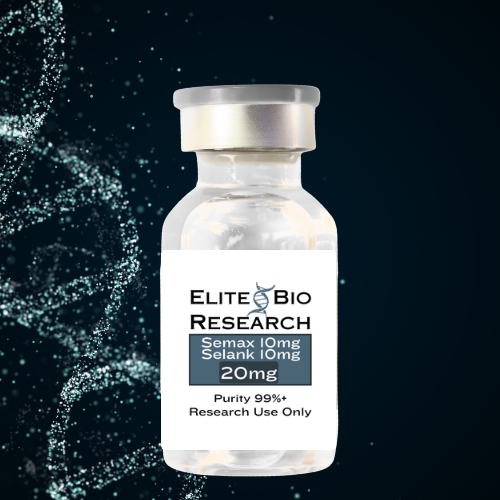
Explore the neuroactive properties of Semax and Selank, two synthetic peptide analogues developed for their potential cognitive and anxiolytic effects in research settings. These compounds offer unique avenues for studying neurological function and stress response mechanisms.
Product Description
Semax and Selank are synthetic peptide analogues derived from the endogenous human neuropeptide ACTH (adrenocorticotropic hormone), specifically ACTH(4-10) for Semax and a modified Tuftsin for Selank. Semax, known for its nootropic and neuroprotective potential, has been investigated for its influence on cognitive processes, memory consolidation, and recovery from neurological damage. Selank, on the other hand, is primarily explored for its anxiolytic and antidepressant-like effects, modulating GABAergic and serotonergic systems, and potentially influencing immune function. Both peptides are subjects of ongoing research into their mechanisms of action, pharmacokinetics, and potential therapeutic applications, particularly in areas related to cognitive enhancement, anxiety disorders, and neuroprotection.
For optimal research integrity, Semax and Selank should be handled with precision in a controlled laboratory environment. Researchers are advised to use appropriate personal protective equipment (PPE), including gloves and eye protection, to prevent direct contact. Avoid inhalation of powdered forms. These compounds are strictly for research and laboratory use only and are not intended for human consumption or therapeutic applications. All experimental protocols should adhere to institutional safety guidelines and ethical standards.
To maintain the stability and purity of Semax and Selank, proper storage is crucial. Lyophilized (powdered) forms should be stored long-term in a cool, dry place, ideally at -20°C, away from direct light and moisture. Once reconstituted with an appropriate solvent (e.g., bacteriostatic water or sterile saline), solutions should be refrigerated at 2-8°C and used within a short period, typically a few weeks, to minimize degradation. Always ensure vials are tightly sealed to prevent contamination and exposure to air.
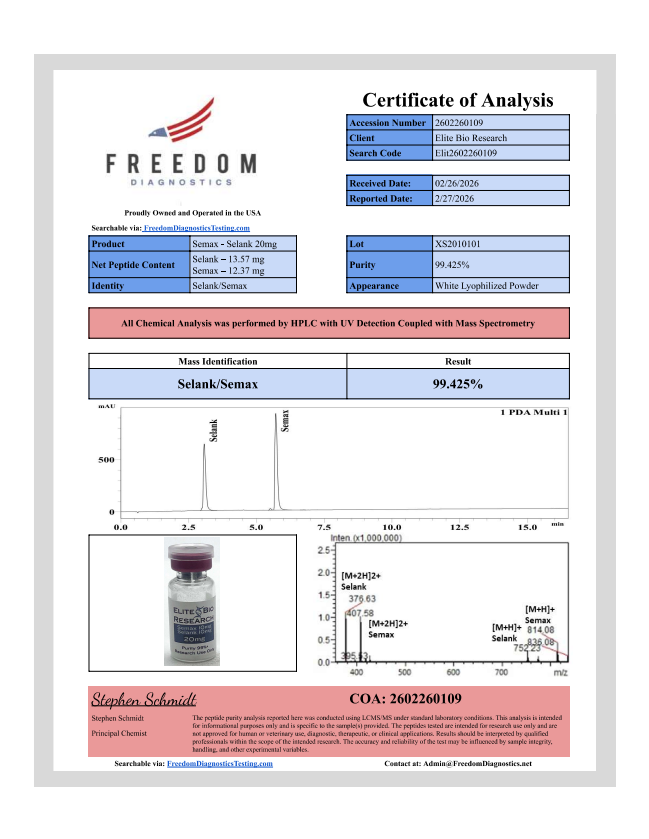
Certificates of Analysis
Research Use Only
This product is intended for research and laboratory use only. Not for human consumption. By purchasing this product, you confirm that you are a qualified researcher and will use this compound in accordance with all applicable laws and regulations.